Wrinkled Cortinarius (Cortinarius corrugatus)
🏷️ Description
If you’re wandering through an eastern North American forest in late summer, especially where oaks and beeches stretch overhead, you might just spot the uniquely wrinkled, sticky cap of Wrinkled Cortinarius (Cortinarius corrugatus). This fascinating — but definitely not edible — mushroom is one of the more distinctive members of the Cortinariaceae family. Let’s unravel its features! 🌳✨
📌 Quick ID Checklist
-
Corrugated, viscid cap (when fresh)
-
Orange to yellowish-brown pileus and stipe
-
Gills pale lilac, aging to rusty brown
-
Rusty brown spore print
-
Marginate bulb at the stipe’s base (young specimens)
-
Foul or spermatic odor
🔎 Identification
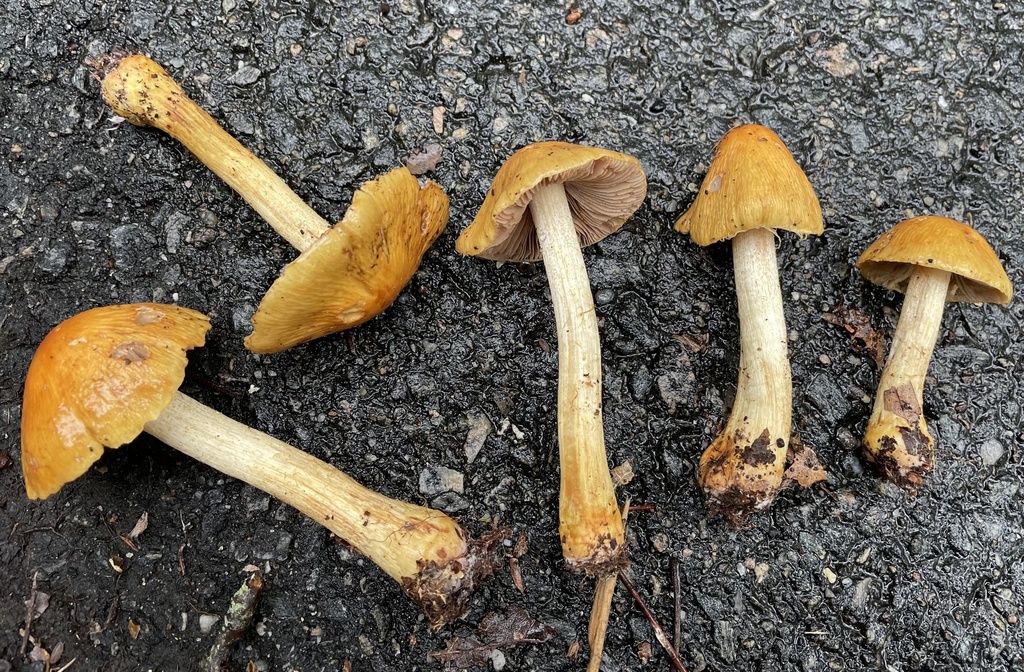
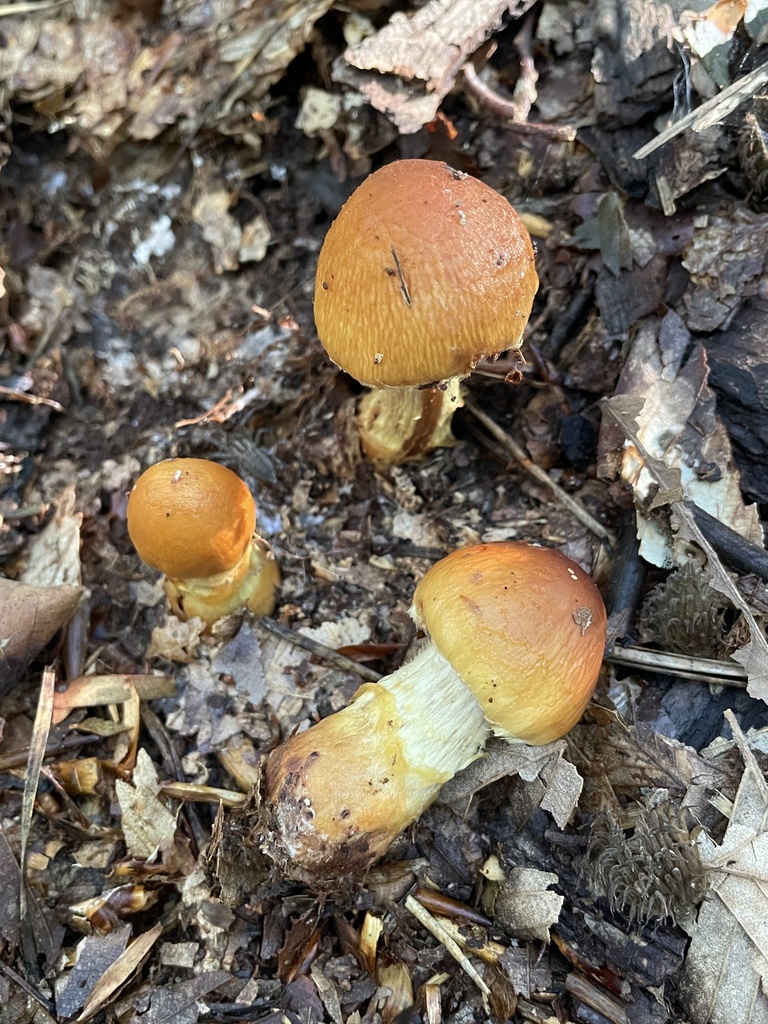
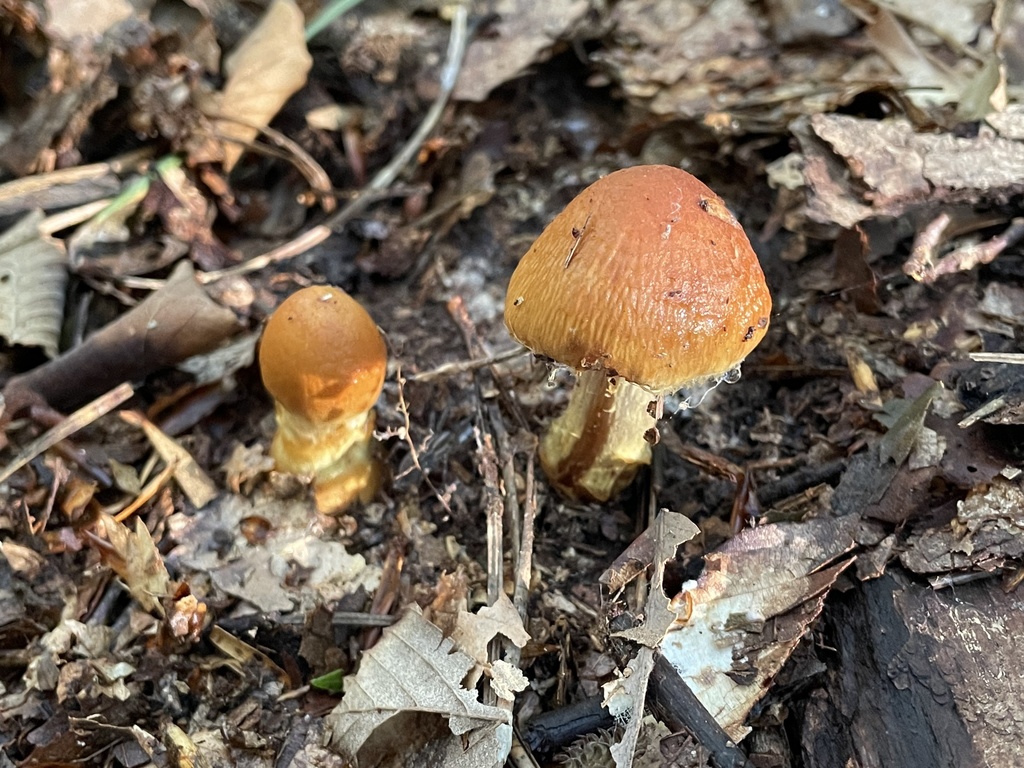
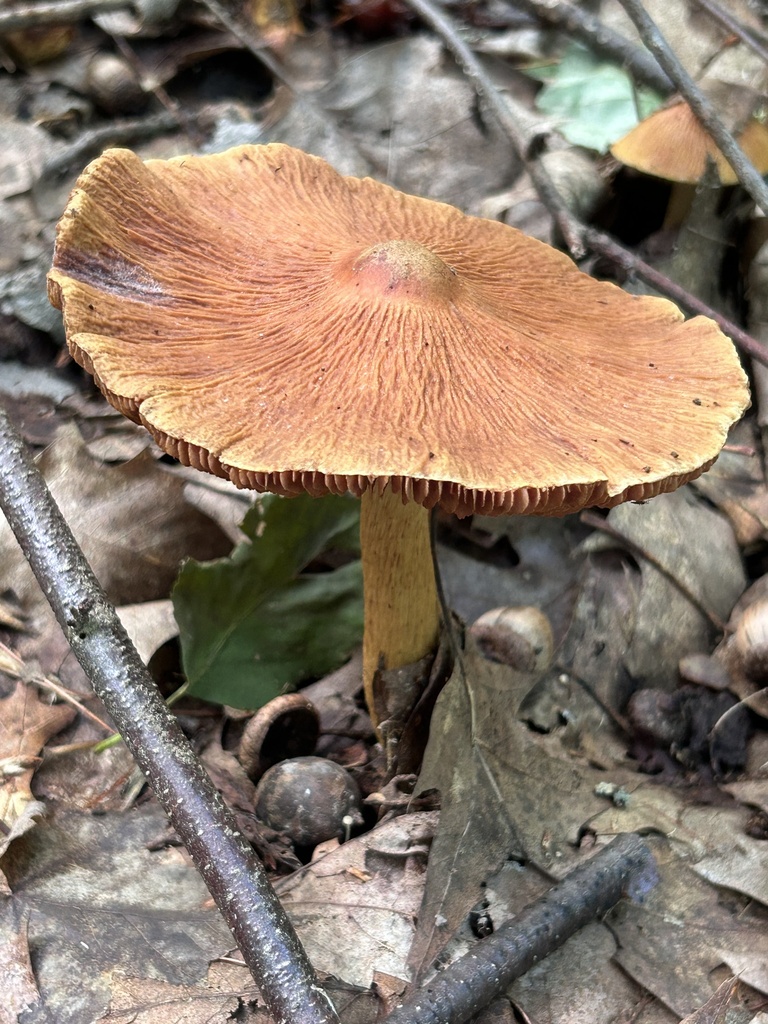
🍄 Cap: Measuring 1.57 to 3.15 inches (4 to 8 cm) across, the cap starts off bell-shaped to convex or widely conical, then matures to a broadly convex to broadly bell-shaped form. It’s sticky when fresh or wet, but tends to dry out quickly. The surface is bald but distinctively corrugated or wrinkled, especially around the edges, with a smoother, darker central disc. Colors range from orange-brown to reddish-brown or yellowish-brown. 🍊🍂
🌿 Gills: Attached to the stem by a notch, the gills are close or nearly distant. They’re a delicate pale lilac at first, taking on a cinnamon to rusty brown hue as they mature, often retaining a hint of lilac. The cortina (the cobweb-like veil) is brownish and ephemeral.
📏 Stem: Rising 2.75 to 5.12 inches (7 to 13 cm) tall and 0.39 to 0.59 inches (1 to 1.5 cm) thick, the stem is dry, finely silky, and typically whitish to pale brownish with subtle orange-brown tones toward the base. It starts off with a slightly swollen or marginate bulb, but this feature diminishes as the mushroom matures. No ring zone is typically present. 🧵✨
🥩 Flesh: Whitish and unchanging when sliced.
👃 Odor: A distinctive foul or spermatic smell, which can be an important field clue! 👃
🌳 Ecology & Distribution
Cortinarius corrugatus is a mycorrhizal species, partnering with broad-leaved hardwoods, especially oak and beech. It grows alone, scattered, or gregariously on the forest floor during summer and fall (July to September). This mushroom is widely distributed in eastern North America and has also made a rare appearance in Costa Rica’s Talamanca mountains near Empalme (Jardín) and occasionally as a gastroid (puffball-like) form in the Savegre river valley.
🔬 Microscopic Features
-
Spores: 12–15 × 8–10 µm, amygdaliform (almond-shaped), and moderately to strongly verrucose (warty).
-
Basidia: 4-sterigmate (producing four spores each).
-
Pileipellis: A slightly gelatinized cutis of ochraceous to orangish, encrusted hyphal elements (2.5–5 µm wide).
-
Chemical Reaction: KOH turns the cap surface dark red to black — another handy ID trick for foragers and mycologists! 🧪
📚 Fun Fact
If not for its uniquely corrugated cap, this mushroom could be a nightmare to identify, as its other traits overlap with numerous other Cortinarius species. Historically, it’s been placed in the now outdated subgenus Bulbopodium, due to its young bulbous base and slimy cap, though these features can diminish quickly as it matures.
🍽️ Edibility
Not edible. Like many members of Cortinarius, it’s best admired and photographed, not tasted.
📸 Conclusion
Cortinarius corrugatus is one of those mushrooms that rewards a sharp eye and a good sense of smell. Its corrugated, orange-brown cap, shifting gill colors, and rusty spore print make it one of the more recognizable — and fascinating — corts to encounter in eastern hardwood forests. 🍁🍄
Photo sources:
Photo 1 - Author: Annie Weissman (Public Domain)
Photo 2 - Author: Annie Weissman (Public Domain)
Photo 3 - Author: Annie Weissman (Public Domain)
Photo 4 - Author: delognut (CC BY 4.0)


