Meripilus sumstinei
🏷️ Description
Meet Meripilus sumstinei, also known as the giant polypore or black-staining polypore! This impressive fungus, commonly found across North America, is a parasitic and saprobic mushroom that forms large clusters around the base of oak trees and other hardwoods. With its eye-catching size and unique characteristics, it’s a sight to behold in the summer and fall seasons.
🔍 Identification Guide
-
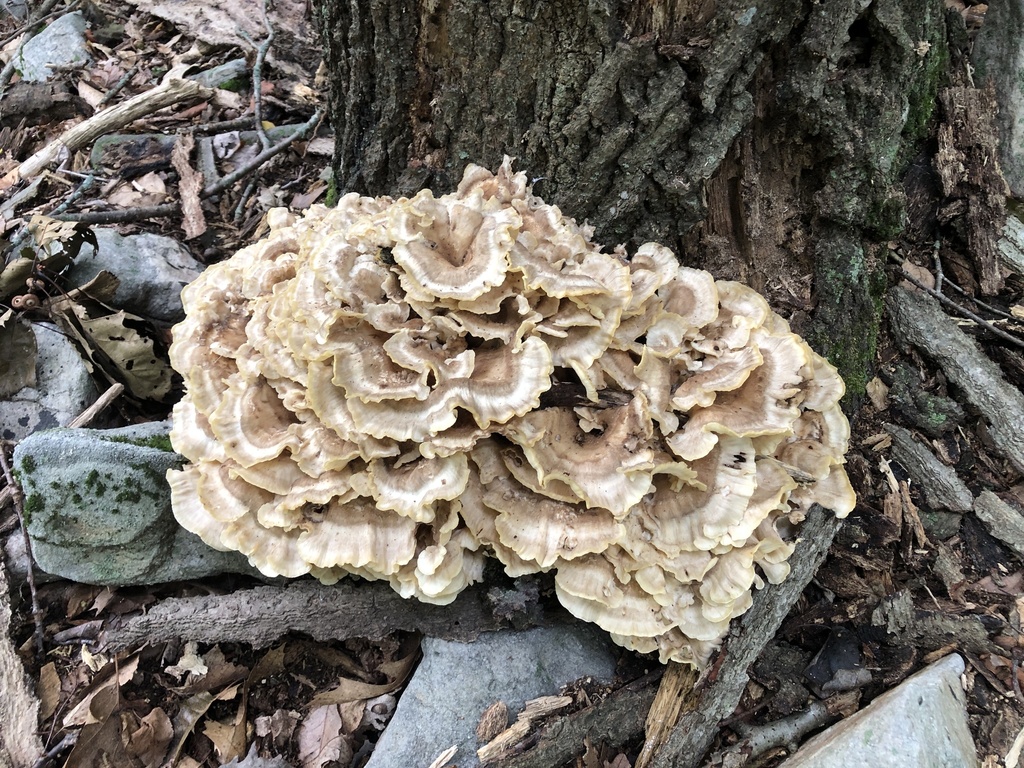
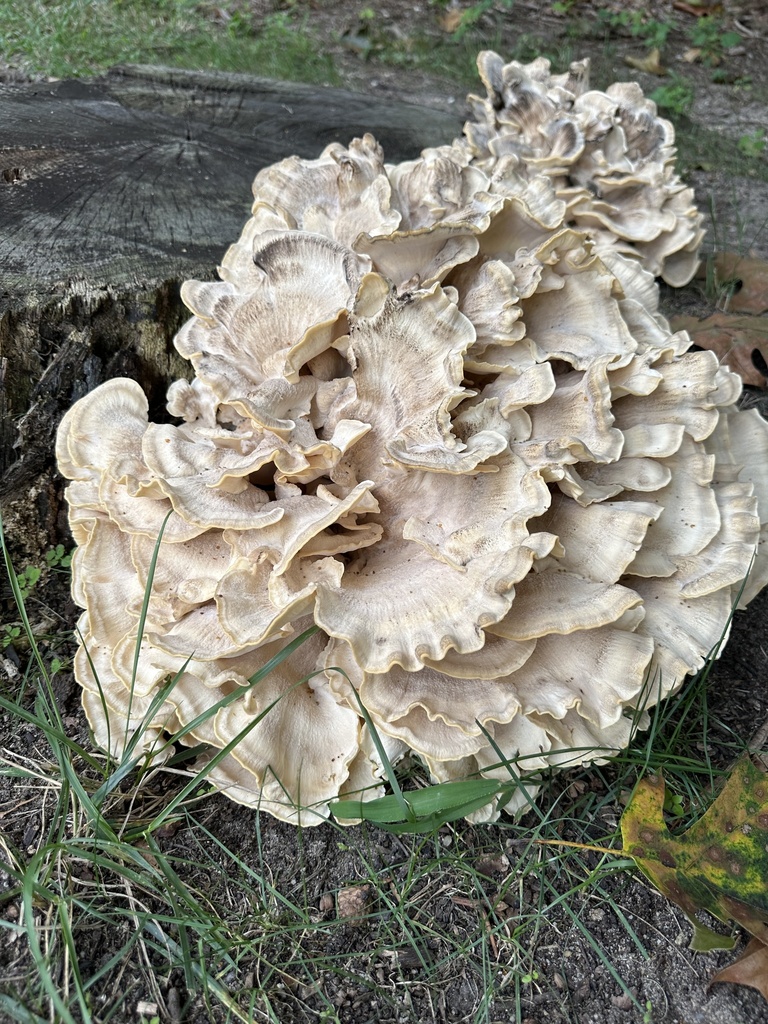
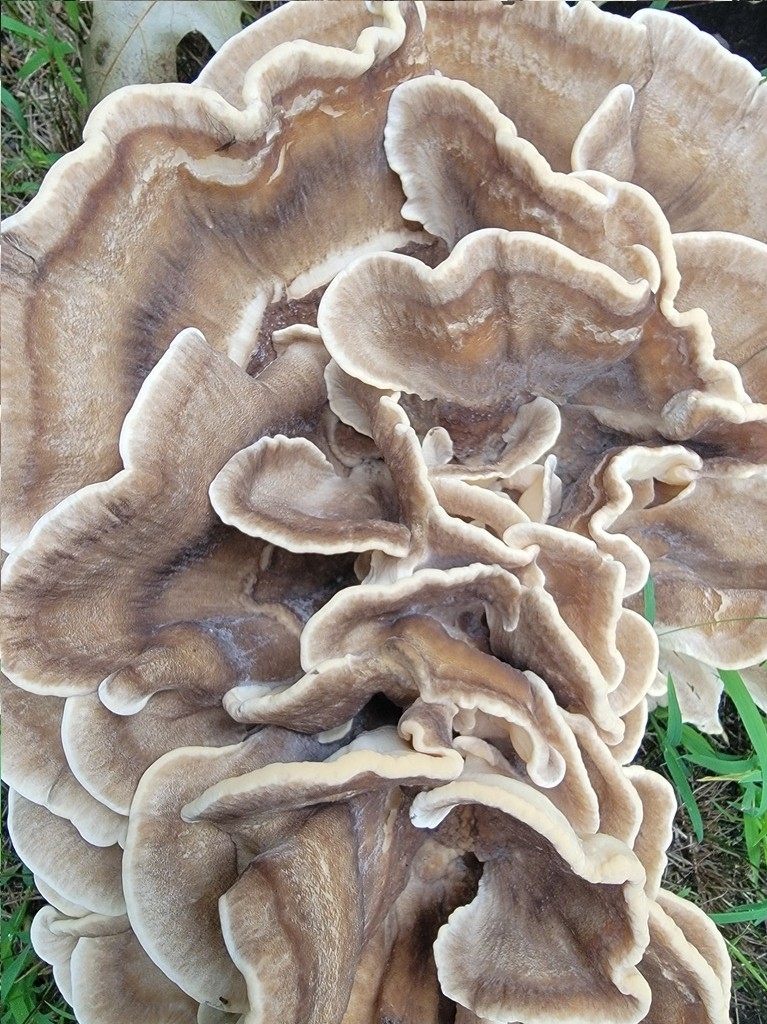
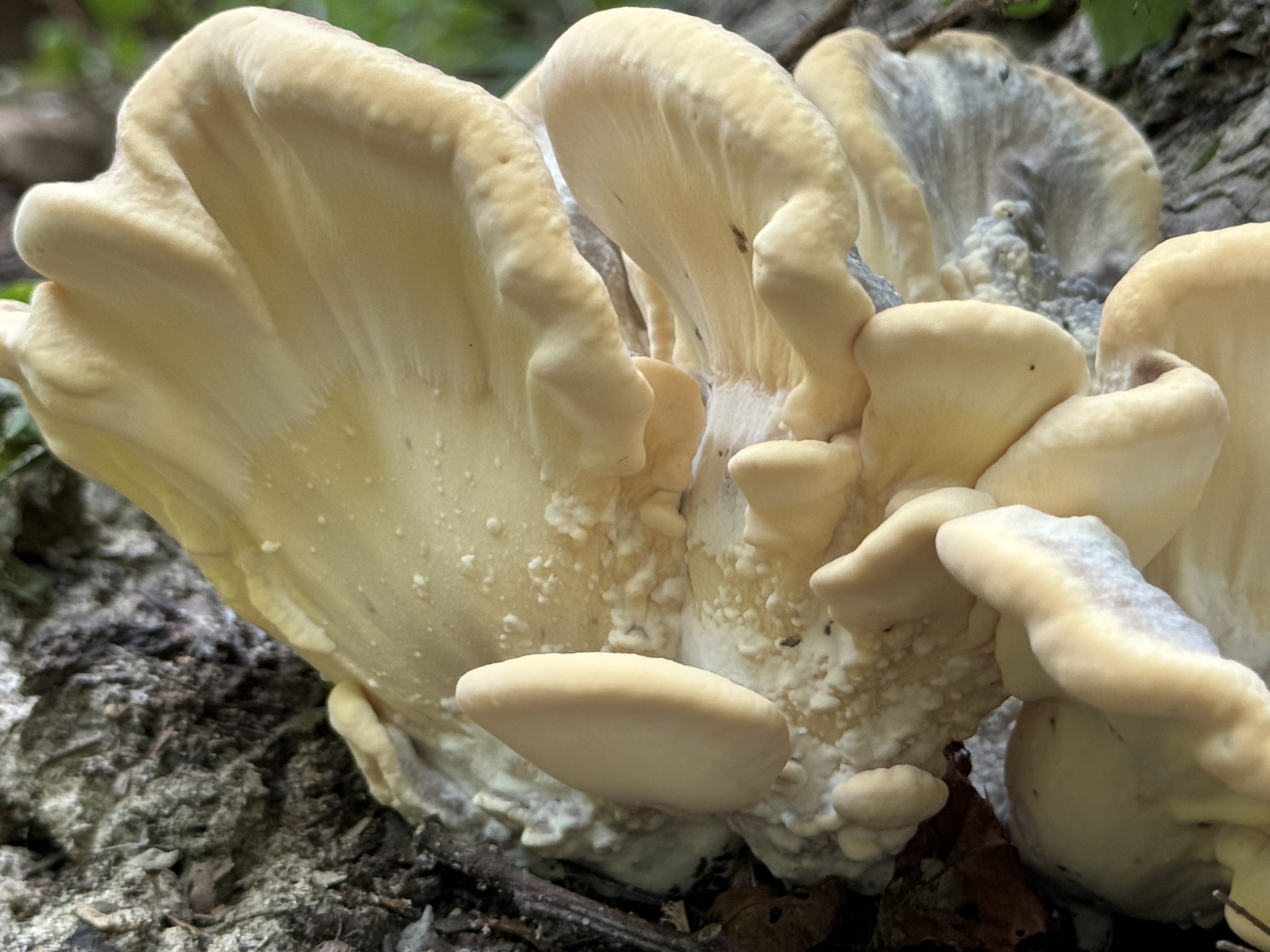
Fruiting Body: Grows in large, overlapping rosettes of flat brackets, reaching up to 11.81 inches (30 cm) or more across. These rosettes are often seen at the base of trees, particularly oak and beech.
-
Caps: Each cap spans 1.97 to 7.87 inches (5 to 20 cm), fan-shaped, and can be finely velvety or smooth. The color transitions from whitish to brownish with age, often showing radial streaks and concentric zones. The margins are thin and blacken as they age.
-
Pore Surface: Whitish when young, turning dirty tan with age, and bruising dark brown to black. The pores are tightly packed, round to angular, and about 6-8 per mm.
-
Stem: Short, tough, and off-center, it starts whitish and turns brown to blackish as it ages.
-
Flesh: Firm, white, and somewhat stringy, it has a mild and pleasant taste and odor.
-
Spore Print: White, with smooth, subglobose spores measuring 5-5.5 x 4.5-5 µm.
🍂 Habitat & Ecology
Meripilus sumstinei thrives as both a parasite and saprobe, primarily on hardwoods like oak and beech. It causes white rot and frequently reappears in the same location year after year. Look for it east of the Rocky Mountains, with occasional sightings in the west.
🧐 Possible Confusion
North American field guides usually treat this species as Meripilus giganteus, but that name refers to a strictly European species; see Larsen and Lombard (1988) for details.
Often mistaken for Hen of the Woods (Grifola frondosa), Meripilus sumstinei differs by its larger caps, blackening pore surface, and smaller pores. Unlike the bright yellow or orange Chicken of the Woods, this "Rooster of the Woods" has a more subdued brownish appearance.
⚠️ Important Notes
While edible, Meripilus sumstinei must be cooked before consumption to avoid potential gastric upset. Enjoy its unique flavor, but always cook it thoroughly!
Photo sources:
Photo 1 - Author: Marissa Calvert (CC BY 4.0)
Photo 2 - Author: jhannonarts (CC BY 4.0)
Photo 3 - Author: Emily Turteltaub Nelson (CC BY 4.0)
Photo 4 - Author: Daniel McNair (CC BY 4.0)


